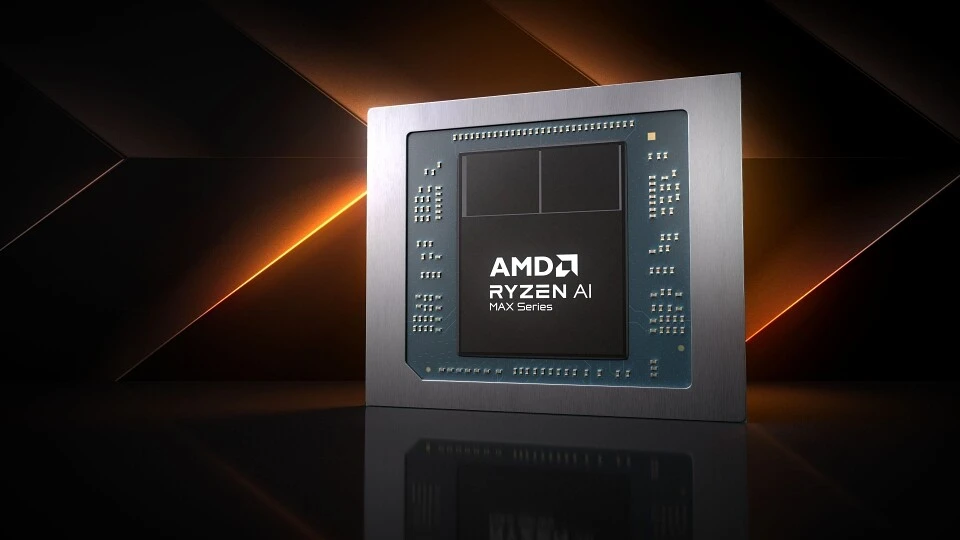



LAS VEGAS, January 16 – AMD has unveiled its latest technological advancements at CES 2025, showcasing the Ryzen AI Max+ processor lineup designed to dominate the gaming, creative, and AI-focused computing markets. With 16 Zen 5 cores, 40 RDNA 3.5 compute units, and a 50 TOPS-capable XDNA 2 NPU, the Ryzen AI Max+ 395 is being heralded as the “World’s first Copilot PC+ processor to run 70B large language models.” AMD claims the processor delivers performance superior to Intel’s Ultra 9 288V, Apple’s M4 Pro, and NVIDIA’s RTX 4090 in specific benchmarks.
During the presentation, AMD emphasized the Ryzen AI Max+’s 2.6x rendering performance over Intel’s 288V and its AI processing speed being 2.2x faster than NVIDIA’s RTX 4090. Apple’s M4 Pro, with its 14-core CPU and 20-core GPU configuration, also fell short in AMD’s benchmarks, with the Ryzen AI Max+ claiming up to an 86% advantage in rendering tasks. However, AMD’s comparisons conspicuously omitted Apple’s 16-core M4 Max chip, which boasts a 40-core GPU and could challenge AMD’s dominance in real-world performance.
The Max+ series also introduces a “Unified Coherent Memory Architecture,” enabling up to 256GB/s bandwidth and supporting up to 128GB of shared memory between the CPU, GPU, and NPU. This architecture allows the Ryzen AI Max+ to allocate as much as 96GB of memory to its integrated GPU, optimizing performance for demanding workloads. AMD’s strategy aims to cater to creators and AI developers while solidifying its place in the gaming and workstation markets.
Beyond the Ryzen AI Max+, AMD expanded its lineup with the Ryzen AI 7 and AI 5 series, targeting mainstream users. These chips promise competitive performance against Intel’s Core Ultra and Qualcomm’s Snapdragon processors, further diversifying AMD’s offerings. The company also introduced the Fire Range desktop CPU series and teased its RDNA 4 graphics architecture, showcasing its commitment to gaming and high-performance computing.
As AMD prepares for the launch of the Ryzen AI Max+ series in the first half of 2025, questions remain about how its processors will fare against Apple’s top-tier configurations. While AMD’s benchmarks are impressive, the omission of direct comparisons to the M4 Max suggests a strategic play that leaves room for further scrutiny.