


BAYAN LEPAS, June 18 — Malaysia Airports Sdn Bhd today successfully conducted a full-scale emergency simulation exercise, codenamed Ex-Harimau Kumbang, at Penang International Airport (PIA).

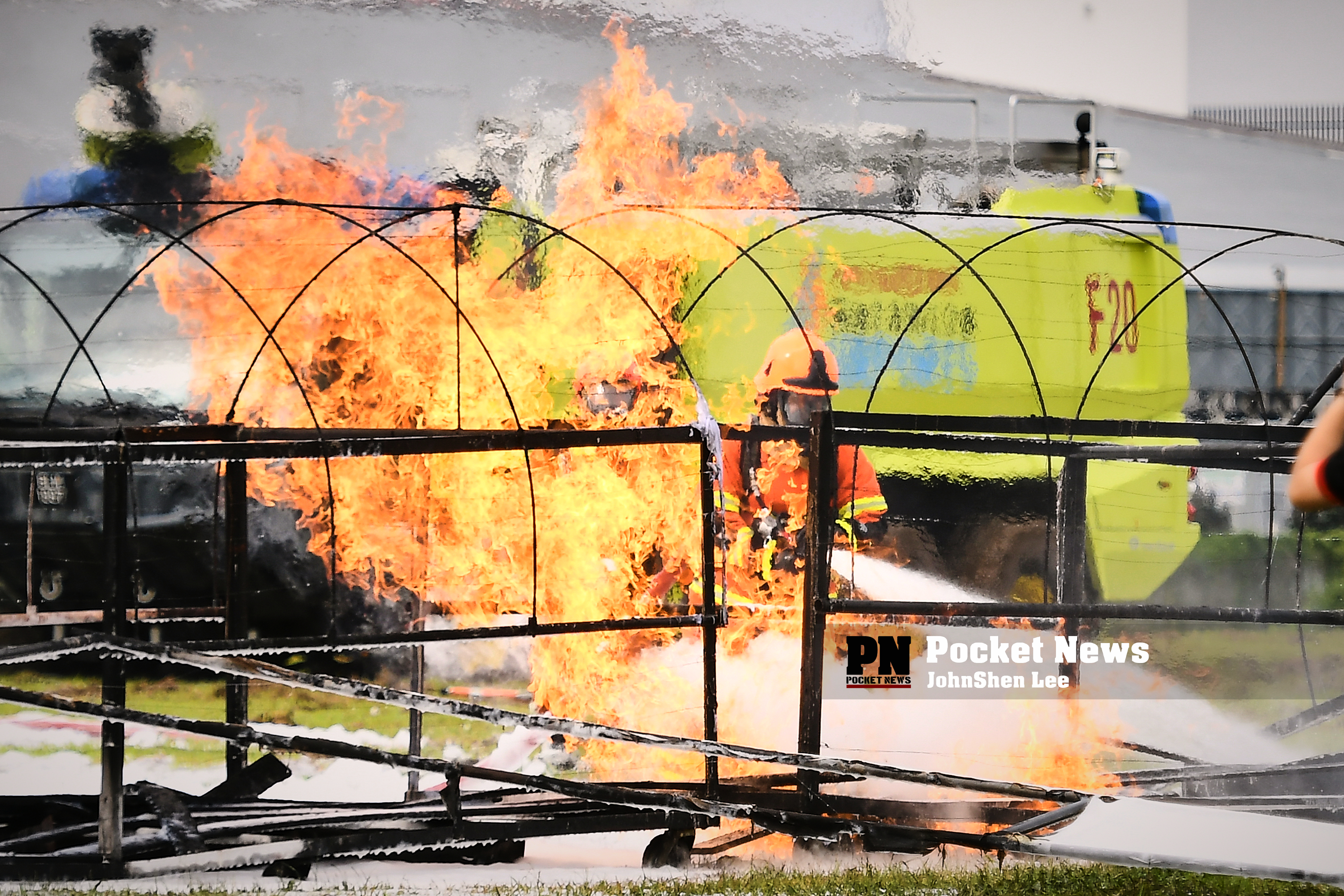
The exercise replicated a catastrophic aircraft crash scenario involving a Boeing 738 with 134 passengers, simulating engine fire and hydraulic failure caused by a bird strike during takeoff. The crash scenario resulted in five simulated fatalities and 129 injured passengers, testing real-time coordination among emergency response teams.

More than 550 personnel from 28 government and private agencies participated in the high-intensity drill, including the Civil Aviation Authority of Malaysia (CAAM), Royal Malaysia Police (PDRM), Fire and Rescue Department (JBPM), Ministry of Health (KKM), and the Air Accident Investigation Bureau (BSKU).


Emergency response units, including three Airport Fire and Rescue Service (AFRS) engines, arrived at the scene within three minutes, quickly extinguishing the fire and initiating rescue operations. The entire simulation was conducted in compliance with international standards set by the International Civil Aviation Organization (ICAO).

Southwest District Deputy Police Chief, Superintendent Nermaljit Singh, emphasized that the exercise aimed to evaluate inter-agency coordination, emergency response time, and crisis communication in line with national and international aviation regulations.


To avoid public confusion and misinformation, the exercise had been pre-announced through official channels. “This training ensures all agencies are operationally prepared should a real incident occur, as seen in recent international aviation accidents,” he said.


Chief of PIA Operations, Mohd Ridzuan Ahmad Walid, confirmed that all aircraft movements were temporarily suspended during the two-hour exercise to ensure safety. He added that such simulations will continue to be held regularly to reinforce preparedness.

The Department of Information Malaysia (Jabatan Penerangan) Penang also played a key role in the simulation by managing the Disaster Media Centre, as outlined under the National Security Council Directive (MKN20), reinforcing the importance of coordinated public information during aviation emergencies.