


Apple’s shift to Apple Silicon has marked a turning point for the Mac Pro, once the pinnacle of power and expandability in the Mac lineup. With CPUs, GPUs and memory now integrated onto a single board, the Mac Pro has lost the upgradability that previously defined it.
A change made even more apparent as the Mac Studio continues to outperform it at a lower cost. Bloomberg reports Apple has “written off” the Mac Pro, cancelling plans for an M4 Ultra version and positioning the Mac Studio as the future of Apple’s pro desktop strategy.
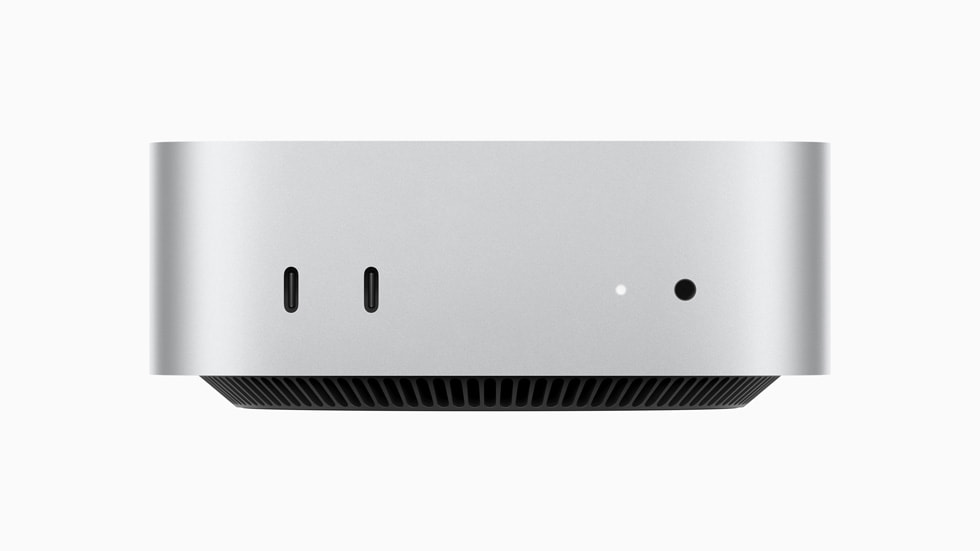
The upcoming macOS Tahoe 26.2 update further cements this transition by introducing a new low-latency Thunderbolt 5 clustering feature, allowing multiple Macs to be linked into a unified high-performance computing system.
Developers and researchers can now combine Mac Studios, Mac minis and MacBook Pros to create AI supercomputers capable of running massive models — such as the 1-trillion-parameter Kimi-K2-Thinking model — more efficiently and with far lower power consumption than traditional GPU clusters.
The update also gives Apple’s MLX framework full access to the new neural accelerators in M5 chips, offering up to four-times faster AI inference and making clustered Macs even more powerful for AI workloads.
With Mac Studios capable of sharing memory pools at Thunderbolt 5 speeds of up to 80Gb/s and handling workloads once exclusive to high-end workstations, Apple’s professional ecosystem is moving toward modular clusters rather than monolithic expandable towers.
As macOS Tahoe 26.2 rolls out, Apple appears to be paving the way for a future where scalable desktop performance comes not from a single Mac Pro — but from a network of smaller, more efficient Apple Silicon machines working as one.