


KUALA LUMPUR, January 15 — With cancer now Malaysia’s third leading cause of death, a multidisciplinary team at Taylor’s University led by Professor Dr Yeong Chai Hong is pioneering affordable, precision-focused cancer treatments to improve access and outcomes.
Driven by the rising cost and uneven availability of advanced therapies, the team has developed two complementary innovations — RadioEmbolisation Samarium Therapy (REST) and Biodegradable Holmium-166 Rods — forming a flexible, image-guided theranostic ecosystem tailored to different tumour types.
REST is a minimally invasive internal radiotherapy that delivers targeted radiation via the bloodstream using the lower-cost Samarium-153 isotope, showing promising preclinical results for cancers such as breast, liver, pancreatic and lung, while offering potential quality-of-life benefits through fewer side effects and hospital visits.
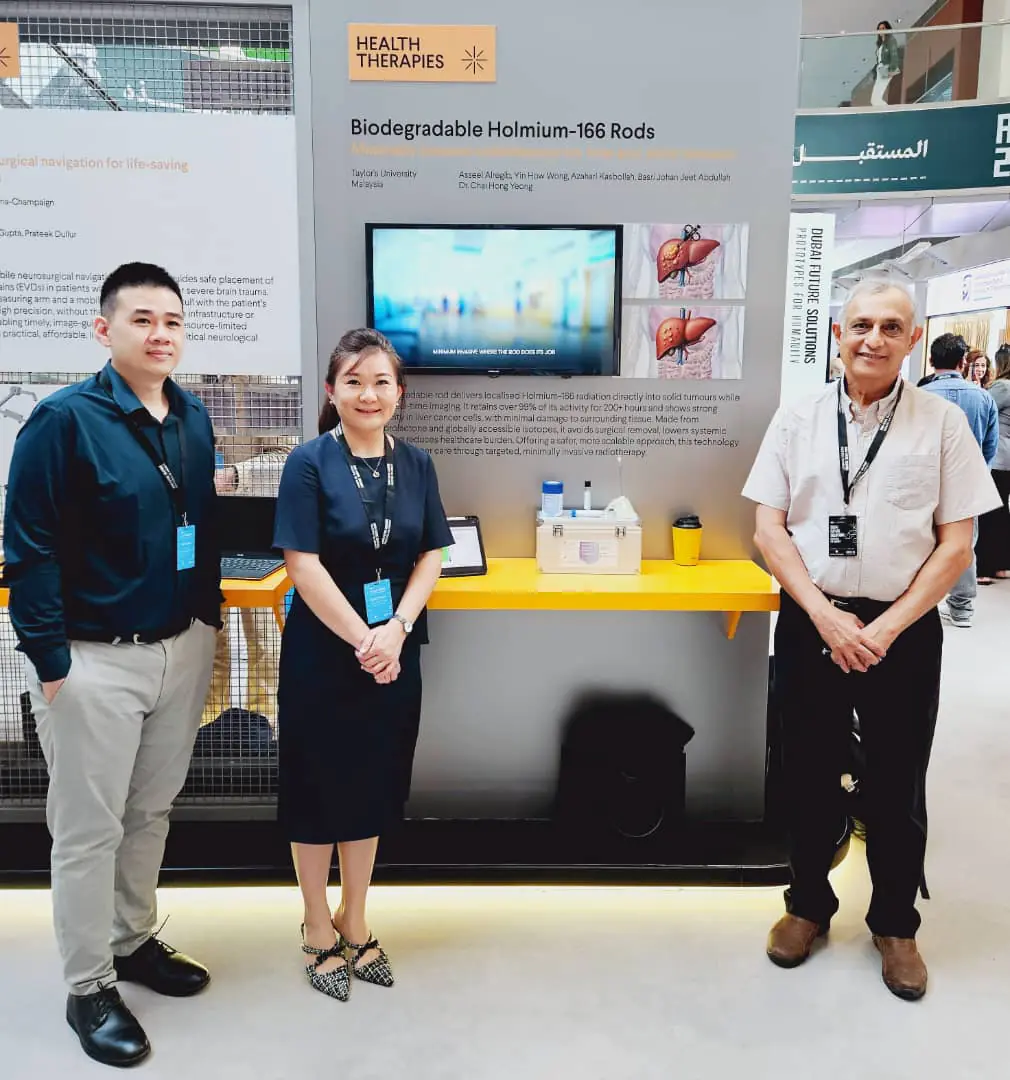
To address larger or poorly perfused tumours unsuitable for vascular treatment, the team introduced Biodegradable Holmium-166 Rods, which are implanted directly into tumours for controlled, image-verified radiation delivery before safely dissolving in the body.
Both innovations have gained international recognition, with REST named among the Top 100 innovations at Prototypes for Humanity 2024 and the Holmium-166 Rods ranked in the Top 10 Groundbreaking Innovations in 2025.
Supported by national research grants and Taylor’s University’s School of Medicine, the work underscores Malaysia’s growing role in impact-driven medical research and signals a broader shift toward theranostics that integrate diagnosis and treatment for more accessible cancer care.