


Photography and photojournalism have changed more in the last two decades than in the entire century before it.
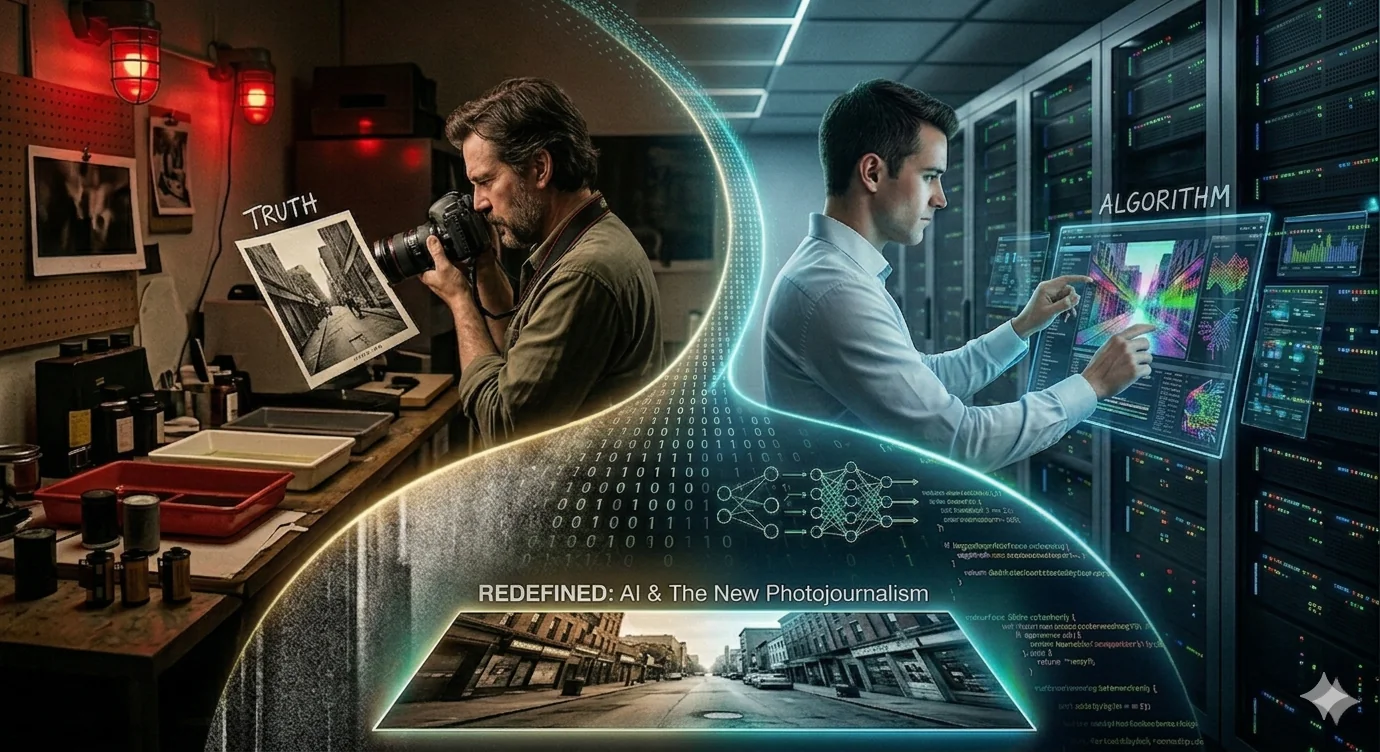
What was once a profession built on patience, technical mastery, timing, and trust has now become a race driven by speed, algorithms, and artificial intelligence.
In the early days, photography was about understanding light, composition, and storytelling. Photojournalists spent years building credibility, waiting for the decisive moment, and documenting reality with honesty.
A single published image carried weight because audiences believed what they saw was real. Cameras were tools of truth, and photographers were witnesses to history.
Then came the digital revolution. Film disappeared, darkrooms became software, and the internet transformed how images were consumed.
Social media accelerated everything. Newsrooms no longer waited for carefully edited photo essays; they demanded instant uploads, viral visuals, and constant content.
The smartphone turned everyone into a photographer, breaking the barrier between professionals and the public.
While technology made photography more accessible, it also devalued the craft. Many media companies began prioritising speed over depth, clicks over storytelling, and quantity over quality.
The industry became overcrowded, budgets were reduced, and professional photographers started competing against free user-generated content.
The respect once given to photojournalism slowly weakened. Now comes the most disruptive era yet — artificial intelligence.
AI can generate hyper-realistic images that never happened. It can remove objects, replace faces, create fake scenes, enhance details, and manipulate emotions within seconds.
The biggest danger is not only job displacement, but the collapse of trust. When audiences can no longer distinguish between a real photograph and an AI-generated image.
The foundation of photojournalism itself is threatened. The worst may still be ahead. Future generations may grow up in a world where visual evidence is no longer considered proof.
Deepfakes, synthetic media, and AI-generated propaganda could reshape politics, journalism, and public opinion. Real photographers may spend more time proving authenticity than creating images.
News organisations could replace assignments with AI-generated visuals to cut costs. Young photographers entering the industry may struggle even harder to survive financially.
While competing against machines that produce content instantly and endlessly. But despite all this, one thing AI still cannot fully replace is human presence.
A machine cannot truly experience fear in a war zone, emotion during a protest, grief after a disaster, or the human connection between a subject and a photographer.
Real photojournalism is not only about creating images — it is about witnessing humanity. The value of authentic storytelling, ethical journalism, and genuine human perspective may become even more important in the AI era.
Perhaps the future of photography will not belong to those with the best cameras or the fastest editing tools.
But to those who can still preserve trust, truth, and human emotion in a world increasingly filled with artificial realities.