


Summary
- Water contamination can occur through condensation, contaminated fuel supplies, damaged seals and rainwater intrusion.
- Contaminated fuel can cause engine misfires, corrosion, clogged filters and potentially expensive mechanical repairs.
- Motorists are advised to maintain their fuel systems and seek professional inspections when contamination is suspected.
GEORGE TOWN, November 6 — Water contamination in vehicle fuel tanks can cause serious mechanical problems, including engine misfires, reduced performance and damage to fuel injection systems.
Raising concerns about how moisture enters fuel supplies and what motorists can do to prevent costly repairs. Although petrol and diesel are designed to power combustion engines.
The presence of water can interfere with fuel delivery and combustion, potentially affecting a vehicle’s reliability and long-term performance.
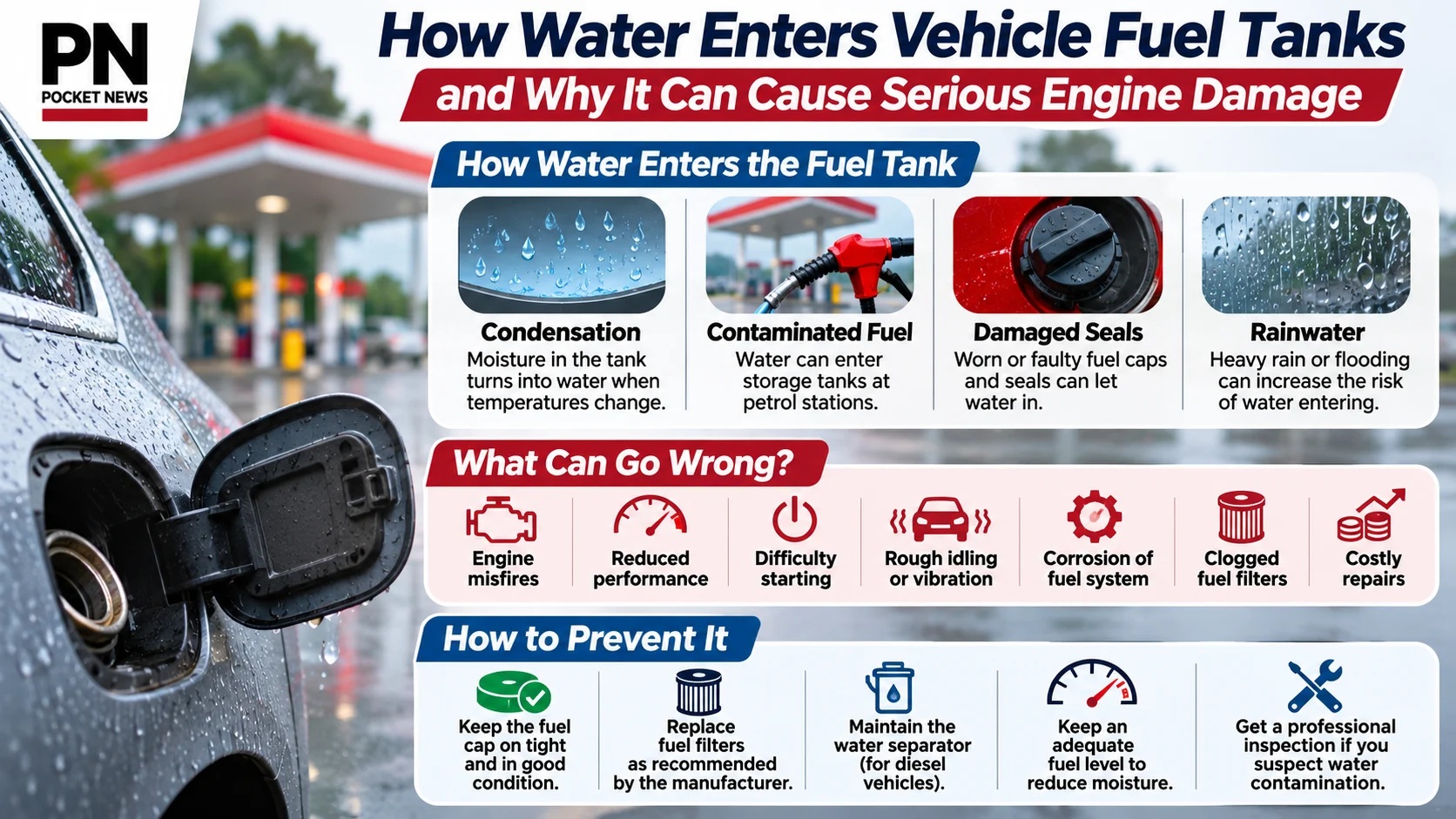
Water can enter fuel tanks through several sources, including condensation, contaminated fuel supplies, damaged fuel caps, faulty seals and improper storage conditions.
How Water Enters Fuel Tanks
One possible cause is condensation, which occurs when moisture in the air inside a fuel tank turns into water droplets as temperatures change.
Vehicles exposed to repeated temperature fluctuations may experience condensation, particularly when fuel tanks contain substantial air space.
However, condensation alone does not necessarily explain every case of fuel contamination, especially when significant quantities of water are discovered.
Another potential source is contaminated fuel supplied during refuelling. Petrol stations typically store fuel in underground tanks before dispensing it into vehicles.
If water enters these storage systems through damaged seals, poorly maintained equipment or flooding, contamination may occur before the fuel reaches a vehicle.
Rainwater can also enter directly through damaged fuel filler caps, faulty seals or openings in the fuel system.
Why Water Contamination Is Dangerous
Water is generally denser than petrol and diesel, meaning free water can settle at the bottom of a fuel tank. When contaminated fuel reaches the engine, it may interfere with combustion.
And cause rough idling, hesitation, difficulty starting or sudden stalling. Prolonged exposure can also contribute to corrosion of metal components, including fuel lines, pumps and injectors.
Modern diesel engines can be particularly sensitive because their high-pressure fuel injection systems require clean, properly filtered fuel.
Water accumulation in diesel storage tanks can also support microbial growth, potentially producing sludge that blocks fuel filters and damages fuel system components.
Can Heavy Rain Cause Fuel Contamination?
Heavy rainfall and flooding can increase the risk of water entering fuel storage systems, particularly when underground tanks, access covers or seals are damaged.
However, rainfall alone does not establish that a petrol station’s fuel supply has been contaminated. Determining whether water originated from a filling station.
Vehicle fuel system or another source requires proper investigation. Fuel samples, storage tank inspections and laboratory testing may be necessary to identify the source of contamination.
Warning Signs Motorists Should Watch For
Vehicles affected by contaminated fuel may experience unusual engine vibrations, reduced acceleration, difficulty starting or unexpected engine shutdowns.
Some vehicles may also display engine warning lights when combustion or fuel delivery problems occur. However, these symptoms can result from several mechanical or electrical faults.
And should not be treated as conclusive evidence of water contamination. Motorists who suspect significant contamination should avoid continuing to drive and arrange an inspection by a qualified mechanic.
How to Prevent Water Contamination
Regular maintenance remains one of the most effective ways to reduce the risk of fuel contamination. Vehicle owners should ensure fuel filler caps are properly secured.
Inspect damaged seals and follow recommended fuel filter replacement schedules. Diesel vehicle owners should also maintain water-separation systems where fitted.
Following the manufacturer’s servicing instructions. For vehicles stored over extended periods, maintaining appropriate fuel levels and protecting the fuel system from moisture.
May help reduce contamination risks. If water is confirmed inside a fuel tank, professional draining, cleaning and fuel system inspection may be necessary.
Fuel additives should only be considered when specifically recommended for the vehicle and fuel type, as they cannot reliably resolve every contamination problem.
Why Identifying the Source Matters
Fuel contamination can result in substantial repair expenses, particularly when fuel pumps, injectors or other sensitive components require replacement.
However, discovering water inside a vehicle’s fuel tank does not automatically establish responsibility on the part of a petrol station or fuel supplier.
A proper investigation should examine the vehicle’s fuel system, refuelling history, fuel samples and relevant storage conditions before determining the likely cause.
For motorists, early detection and appropriate maintenance remain essential to preventing minor fuel contamination problems from developing into major mechanical failures.
As Malaysia experiences periods of heavy rainfall, understanding how water can enter fuel systems may help motorists recognise potential risks and take appropriate preventive measures.