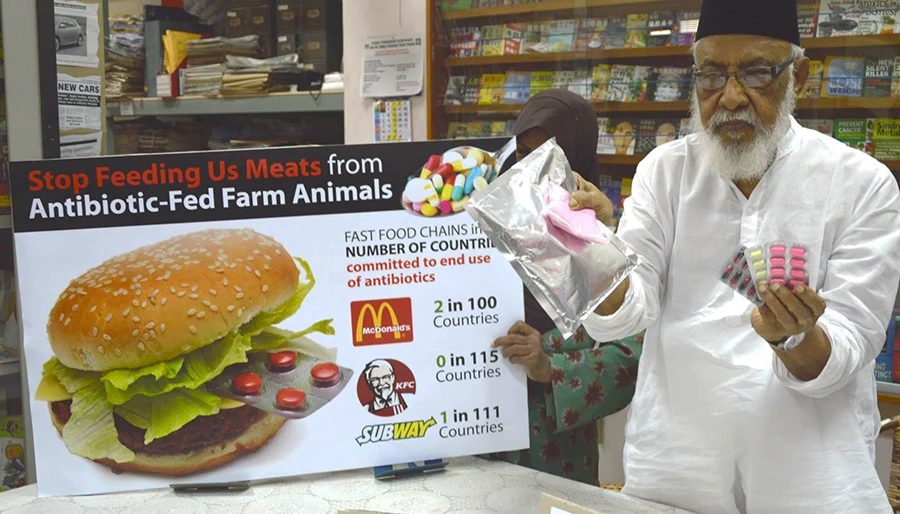



GEORGE TOWN, March 15 – The Consumers Association of Penang (CAP) today urged the Health Ministry and Agriculture and Agro-Based Industry Ministry to ban the use of antibiotics in animal feed. It president S. M Mohamed Idris also urged fast food chains to stop feeding Malaysians with meats sourced from antibiotic fed farm animals as this posed risks to consumers when bacteria in their body were resistant to different types of antibiotics.
He said the European Union and many countries have banned the non-medical use of antibiotics in animal feeds to combat the crisis caused by antibiotic resistance. He said many antibiotics, including the most potent ones, are becoming increasingly ineffective against diseases – causing a global public health crisis.
“Antibiotics are routinely introduced in animal feeds as growth promoters. In the US, 70% of antibiotics are used for animals. In Malaysia the use of antibiotics in animal feeds continues unabated. Consumers International, the global umbrella body for consumer associations around the world, launched a report which highlighted the failure of fast food chains to phase out the selling of products made of meats from animals raised with the routine use of antibiotics,” said Idris.
According to the report, Idris said McDonald’s has commitments in only 2 (US and Canada) out of the 100 countries they operate in. He added that KFC has made no meaningful commitment and Subway has made a commitment in only 1 out of the 111 countries which they operate in.
In Malaysia, he said there is sufficient evidence to show that antibiotic resistant bacteria are present in the many food products sold in Malaysia which the Department of Veterinary Services in 2012 found that half of domestic chickens tested were found to be resistant to 3 types of antibiotics.
He said the imported chickens have even higher levels of antibiotic resistance, with 50-87% of them having resistance to different types of antibiotics. Furthermore, he said 75% of live chickens sold at wet markets in Selangor tested positive for Campylobacter and 25-95% of the bacteria were resistant to different types of antibiotics. He also added that there were more than a third of bacteria samples showed multidrug resistance.
“Frozen burger patties taken from supermarkets and retail shops showed the presence of multidrug-resistant strains of Listeria monocytogenes in nearly half of the samples. The routine overuse of antibiotics in animal farms in Malaysia is not surprising. During a CAP survey in Kedah and Perlis, we found the antibiotic erythromycin to be widely available in shops selling animal feed. We were told that the antibiotic should be routinely fed to the animals as a growth promoter,” said Idris.
“Erythromycin is also used for treatment of diseases in human beings. In the same survey we could also buy erythromycin at pharmacies in the rural areas without a prescription, flouting our laws.Antimicrobial or antibiotic resistance is one of the most serious health threats Malaysia faces,” he said.
“Infections from resistant bacteria are now common and some pathogens have even become resistant to multiple types or classes of antibiotics. With the increasing ineffectiveness of ‘drugs of last resort’, we are on the brink of a public health disaster. Left unchecked, antibiotic resistance will kill 10 million a year in 2050. It is expected to kill 4.73 million in Asia alone,” he said.
“In view of the catastrophic antibiotic resistance crisis, CAP would like to urged the ministry to establish a national system to monitor the use and misuse of antibiotics in animal feed and educate and train farmers on the proper use of antibiotics,” he added.