


BUTTERWORTH, September 24 – Penang Port Sdn Bhd is awaiting government approval for its RM2.2 billion expansion project at the North Butterworth Container Terminal. Once approved, the expansion will be rolled out in phases as part of the port’s long-term concession agreement, which runs until 2055. The master plan, submitted in 2023, aims to boost the port’s capacity in response to the growing industrial demands, particularly from the solar and paper manufacturing sectors in the northern region.

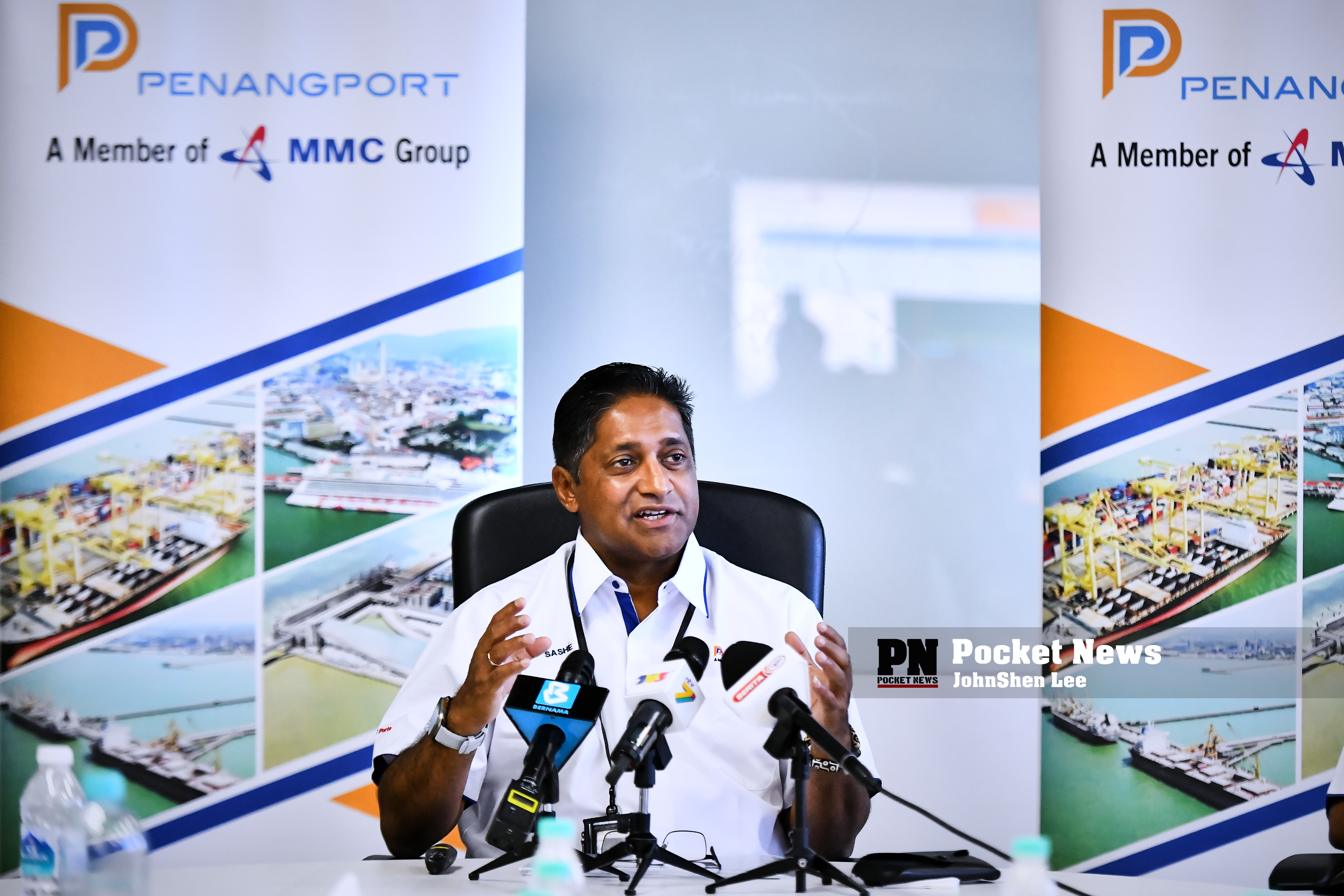
Penang Port’s chief executive officer, Datuk Sasedharan Vasudevan, highlighted that the phased expansion is critical to capturing rising container market demand and supporting increased export activity from these industries. If the plan is approved, reclamation and construction works are expected to begin within 18 to 24 months. The expansion includes a significant upgrade to the port’s infrastructure, aiming to support future growth and regional industrial activities.

Currently, the port’s quayside capacity stands at 2.3 million twenty-foot equivalent units (TEUs), with plans to increase this capacity to 4.1 million TEUs by 2050. Additionally, the yard capacity will rise from 2.2 million to 2.9 million TEUs. The plan also includes expanding the existing berth from 1.5km to 2.9km and constructing a new gatehouse to ease congestion. These improvements will create 70 hectares of new container yard space and 107 hectares dedicated to logistics warehousing.

Despite these long-term plans, Penang Port is facing immediate challenges, such as the ongoing Red Sea crisis, which continues to disrupt global shipping routes. The crisis, which intensified in April, has caused the port to lower its expected container throughput for 2024 to 1.5 million TEUs, down from the earlier projection of 1.55 million TEUs. Last year, the port handled 1.44 million TEUs, and the disruption is expected to result in the loss of 50,000 to 60,000 containers this year.

To counter these disruptions, Penang Port is shifting its focus to alternative markets like the Bay of Bengal, which has shown significant potential. Sasedharan noted that transshipment activity in the Bay of Bengal has doubled since 2021, offering new growth opportunities. Penang Port aims to handle between 30,000 and 40,000 containers from this region by the end of the year and is exploring further expansion in this market to offset the impacts of the Red Sea crisis.