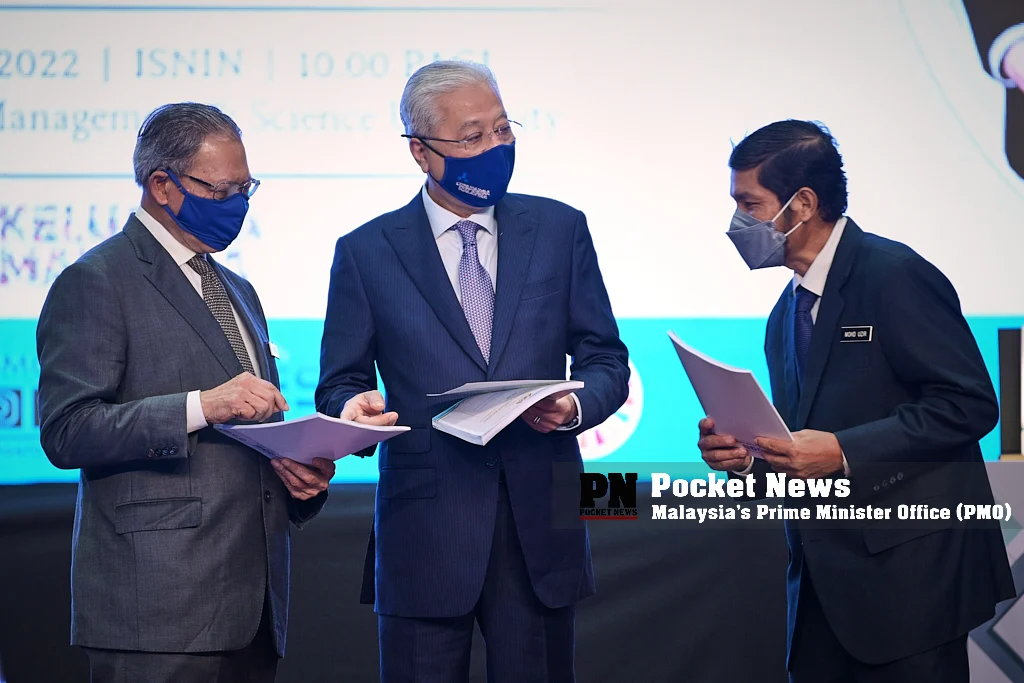



 PUTRAJAYA, October 11 – Malaysia Prime Minister YAB Ismail Sabri had chaired the Malaysian Climate Change Action Council (MyCAC) Meeting No. 2 of 2021 on 11 October 2021. The Council is composed of 13 Chief Ministers and Chief Ministers, 16 Cabinet Ministers, the Chief Secretary to the Government and 2 experts as invited members. The issue of climate change must be addressed immediately by taking into account the impact of the phenomenon of global warming caused by increased emissions of greenhouse gases (GHG) due to human activities.
It will affect the global climate system which in turn leads to more extreme weather events. In addition, global warming will also have an impact on the socio-economic development of the country if not addressed jointly at an immediate rate. Therefore, it is important for the country to remain committed and progressive in addressing this issue of climate change. I would like to emphasize that the climate change and green technology agenda is a national priority under the current government administration. This commitment is contained in the Third Theme of the Twelfth Malaysia Plan (12MP)-Boosting Sustainability.
The meeting took note of the 26th Conference of Member States on the United Nations Framework Convention on Climate Change (UNFCCC COP-26) to be held in Glasgow, Scotland from 31 October to 12 November 2021. For the first time, the country’s stance to be presented during the UNFCCC COP-26 has been discussed at the highest level in the country through the MyCAC platform. Although I and the Honorable Minister of Environment and Water Malaysia (KASA) were unable to attend the World Leader’s Summit on 1 to 2 November 2021 and UNFCCC COP-26, the outcome of the meeting mandated the KASA-led delegation to deliver the National Statement. Among the essence of the discussion and the results of the meeting that will be highlighted in the National Statement are as follows:
i. A more ‘ambitious’ update of Nationally Determined Contributions (NDC) to UNFCCC COP-26. Malaysia aims to reduce the intensity of GHG emissions across the economy by 45 percent (based on Gross Domestic Product) by 2030. The reduction in intensity was made unconditional and 10 percent higher than the previous target;
ii. The country’s aspiration to achieve net-zero GHG emissions as early as 2050. The achievement of this target is subject to the results of the Long-Term Low Emissions Development Strategy (LT-LEDS) study. will be finalized by the end of 2022 by KASA;
iii. Implementation of the Domestic Emissions Trading Scheme (DETS) by KASA, in collaboration with the Ministry of Finance and Bursa Malaysia Berhad. The scheme involves the development of a single platform for carbon credit transactions at the domestic level. The Government is confident that DETS has the potential to attract low -carbon investment into the country, increase the international competitiveness of Malaysian products and generate sustainable financial resources for domestic entities;
iv. Increase renewable energy generation, target the procurement of 100% non-internal combustion engine (ICE) government vehicles by 2030, maintain at least 50% of the country’s forest cover, promote ‘zero waste’ and recycling as well as development low -carbon cities through the Low Carbon City Master Plan and the concept of cyclical economics;
v. The Government has also taken into account climate change factors in the engineering design of water -related infrastructure systems, to ensure sustainable water management; and,
vi. Encouraging more private parties makes the aspiration of zero net GHG emissions in the company’s operational sustainability agenda.
In this regard, ASEAN should be utilized as a negotiating group to voice the common position of countries in the region. Given that the issue of climate change is cross -sectoral, and is now also linked to international trade issues, it is important for KASA to continue to lead the agenda. Therefore, the government should strengthen the governance of climate change in the country, among others through the establishment of the National GHG Center under KASA.
It is important to increase the transparency of the country’s climate change information reporting and climate change data managed by the center, in order to increase low -carbon investment confidence. The country also needs to take into account the planetary health approach to address the climate crisis and protect the health of Malaysian families. In line with the ‘whole of nation’ approach, all stakeholders are called upon to jointly contribute to the national climate change agenda and mainstream the issue in national policy development plans and implementation.