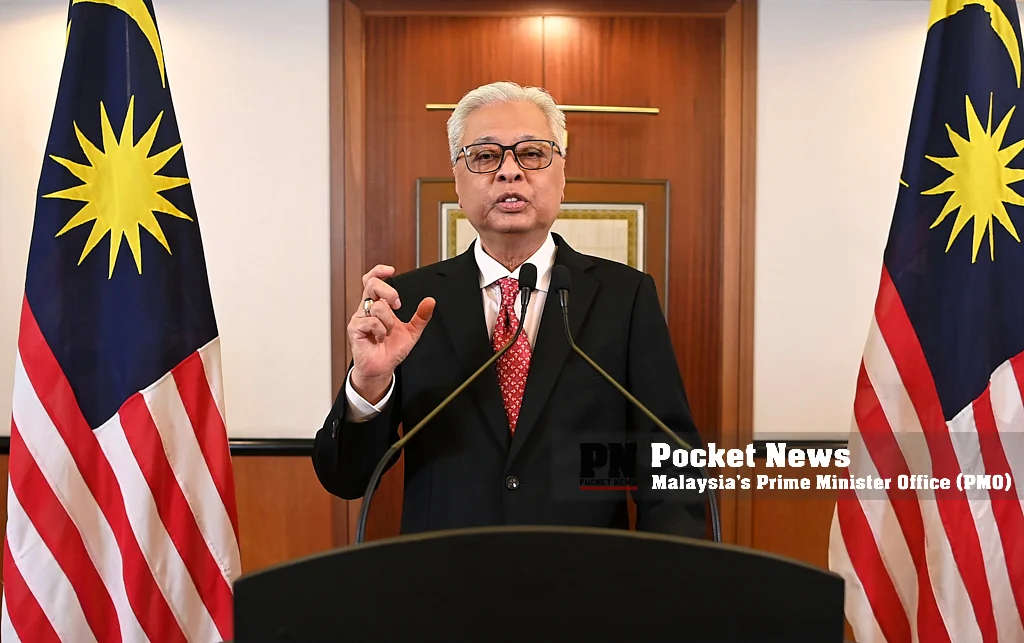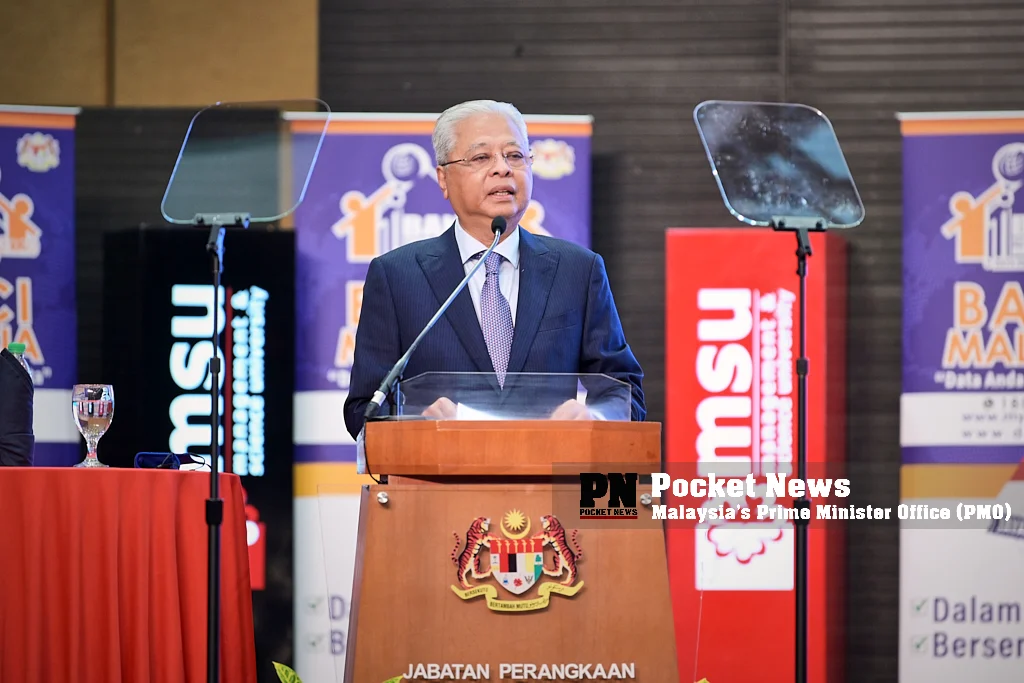



SELANGOR, February 14 – The opening ceremony of the 2020 Population and Housing Census Key Findings Report. I am also very honored and thank you for inviting me to complete the ceremony this morning.
Malaysia’s economic landscape traces a significant evolution as the manufacturing sector replaced the agricultural sector as the major contributor to Gross Domestic Product (GDP) and made Malaysia an industrial nation in the 1980s.
Since that period, statistics prove the country’s economy continued to grow rapidly and eventually shifted to a service -based nation in the millennium era. This evolutionary movement certainly demands comprehensive planning and is supported by facts and data that form the basis for effective policy -making.
The need for data in the era of information mastery is now becoming more critical especially in mainstreaming sustainable development in the country as well as to increase the strength of competitiveness at the international level.
Therefore, the findings of the Main Findings Report of the 2020 Population and Housing Census is the best platform for this matter to be realized.
For that purpose, of course, the need to produce various data and indicators at the detailed and micro levels is very significant. Information is no longer needed at the state or district level but even at the mukim, locality such as parks or villages. This is very necessary so that the government can formulate targeted policies and equitable distribution of welfare to the people.
To ensure that this success continues to be enjoyed by all levels of the Malaysian Family, Alhamdulillah, a five-year development plan, namely the 12th Malaysia Plan (12MP) has been outlined. Through this plan, the government can formulate and implement fiscal policies to ensure sustainable economic growth and manage the distribution of financial resources efficiently and effectively.
The 12MP for the period 2021 to 2025 has set a strategic direction to achieve the objective of “Prosperous, Inclusive, Sustainable Malaysia” by focusing on efforts to revive economic growth, ensuring the country’s prosperity can be distributed more fairly and equitably.
The plan will catalyze growth, ensure economic recovery and rebuild the nation’s economy to achieve prosperity, inclusivity and sustainability. Economic growth as well as a more equitable distribution of wealth will reduce gaps between income groups, ethnicities, regions and the supply chain while ensuring environmental sustainability.
The 12MP also focuses specifically on efforts to ensure national security and sovereignty as well as strengthen the unity of the people. In this context, the census will be used as an evidence-based decision-making input in the determination of per capita grants, key policy formulation, benchmarks in measuring the Sustainable Development Goals (SDGs) 2030,
The latest benchmarks for population-based indicators and performance assessments as well as the production of small area statistics, which also focus on the need to measure the achievements of the 12th Plan and further improve the living standards of Malaysian families in line with the SDG 2030 principle of ‘Leave No One Behind’.

Population and Housing Census Statistics can provide a true picture of the current population situation in Malaysia including the size, distribution, composition and socio-economic characteristics of the population and housing. Based on the information obtained, the government will be able to determine how government funding worth billions of Malaysian ringgit can be spent throughout the country.
This is how the government can channel financial assistance to deserving and needy people such as addressing the widening income and wealth gap, eradicating poverty and managing the B40 income group of households, including the vulnerable (economically vulnerable) and marginalized.
Here, the Department of Statistics is also responsible for issuing the calculation of income group of households according to categories B40, M40 and T20. Target groups such as the elderly and people with disabilities will also be no exception to enjoy this abundance of well -being.
The production of a detailed profile will be used to make plans and decisions regarding the public services required for each locality such as hospitals, schools, roads and public transport. It will also be used for the calculation of per capita income, the formulation of senior citizens policies and social planning.
In addition to determining the best policies and procedures, the information gathered through this census will be used to assess the country’s current performance. Data collected through the 2020 Population and Housing Census can give us an idea of where we are.
The government can also provide the best input in setting the direction of the country in the future. As an upper middle income country with a large composition of young generation and students in society, the government will also focus on preparing the young generation to meet the challenges of IR4.0 by strengthening school and university education curricula by strengthening a holistic education system, and implementing various initiatives to improve data- and science -based analytical evaluation skills.
In addition, the creation and employment opportunities is indeed one of the important national agenda in ensuring the well -being of Malaysian families.
Here, I am pleased to announce some of the key findings of the 2020 Census of Population and Housing as follows:
POPULATION AND HOUSEHOLD SIZE
- Malaysia’s population is 32.4 million with the Average Annual Growth Rate (CAGR) of the population is 1.7 percent in 10 years. In terms of Residence, a total of 9.6 million were counted.
- There are 8.2 million Households (IR) with an Average Private IR Size of 3.8.
CITIZENSHIP
- The population by citizenship showed that 91.7 percent (29.8 million) were citizens, while 8.3 percent (2.7 million) were non -citizens.
POPULATION BY SEX AND ETHNICITY
- Of the 32.4 million population that has been counted, 52.3 percent are male while 47.7 percent are female. The Gender Ratio was 110 men versus 100 women.
The census findings also show the state with the number of women outnumbering men is W.P. Putrajaya, where 100 women equals 96 men. For statistics by ethnicity, the Bumiputera population recorded the highest percentage of 69.4 percent followed by Chinese (23.2%), Indians (6.7%) and Others (0.7%).
In terms of age group, findings from 32.4 million Malaysians show that 6.8 per cent are aged 65 and above, 69.3 per cent are working age (15 to 64 years) and the remaining 24.0 per cent are young (0 to 14 years).
Senior citizens, ie the population aged 60 years and above, were recorded as 10.5 percent (3.4 million). compared to 2010 was 8.0 percent (2.2 million). Young age has shown a decline from 27.6 per cent in 2010 to 24.0 per cent in 2020.
That is one of the findings of the 2020 Census which will be a new benchmark for the government to outline policies and policies related to the development of people’s well-being, in addition to providing comprehensive input in the implementation of existing policies such as the 12th Malaysia Plan (12MP) and Agenda 2030 Sustainable Development (SDGs).
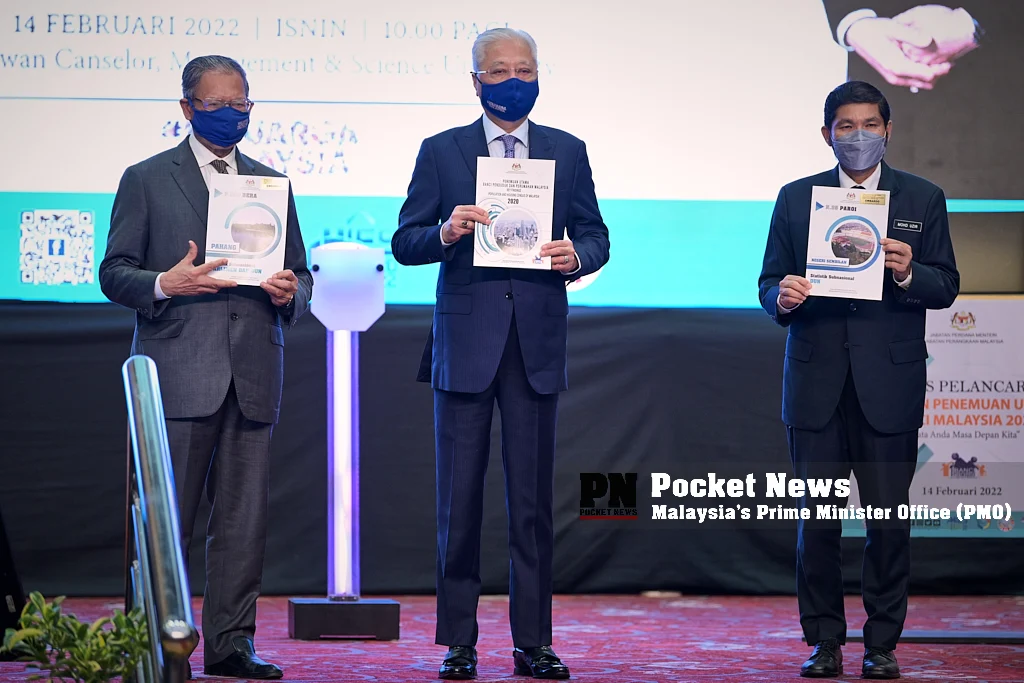
In producing population and demographic statistics through the implementation of the 2020 Malaysian Population and Housing Census, collaboration and strategic cooperation between the Department of Statistics Malaysia and ministries, and state government agencies and local authorities as well as the private sector and the general public have been closely intertwined to ensure the integrity of published data. .
I also express my highest appreciation to the ministries, state government agencies and local authorities, the private sector and all Malaysian families who participated in the successful implementation of this census to produce outcomes that are beneficial to the country and the people, not only for the current generation but also for future generations. Comprehensive Census data is proof of togetherness as a dynamic and harmonious Malaysian Family.
Before concluding the speech, I would like to record congratulations and well done to the Department of Statistics Malaysia and all agencies and parties involved in the success of the Council today.
Hopefully the efforts, enthusiasm and commitment that have been shown do not stop here but should be streamlined in line with the current needs of the people. I call on the people of this country to continue to cultivate data and information in the management of life so that the country can form a civilization of a nation that is critical and analytical based on data.
These statistics and data are closely related to thought patterns and subsequently processed into results and outcomes. As a result, the country will produce first -class minded people in line with the aspirations of the Malaysian Family towards achieving a developed nation by 2030. Finally, in the words of Bismillahirrahmanirrahim, I hereby officiate the Launching Ceremony of the Main Findings Report of the 2020 Malaysian Population and Housing Census.