


KUALA LUMPUR, February 24 – The Sompo Welfare Foundation (“The Foundation”) presented a cheque amounting to RM32,500 to Persatuan Sindrom Down Malaysia. They were among four (4) recipients of the Foundation’s FY2021 International Social Welfare Grant outside Japan.
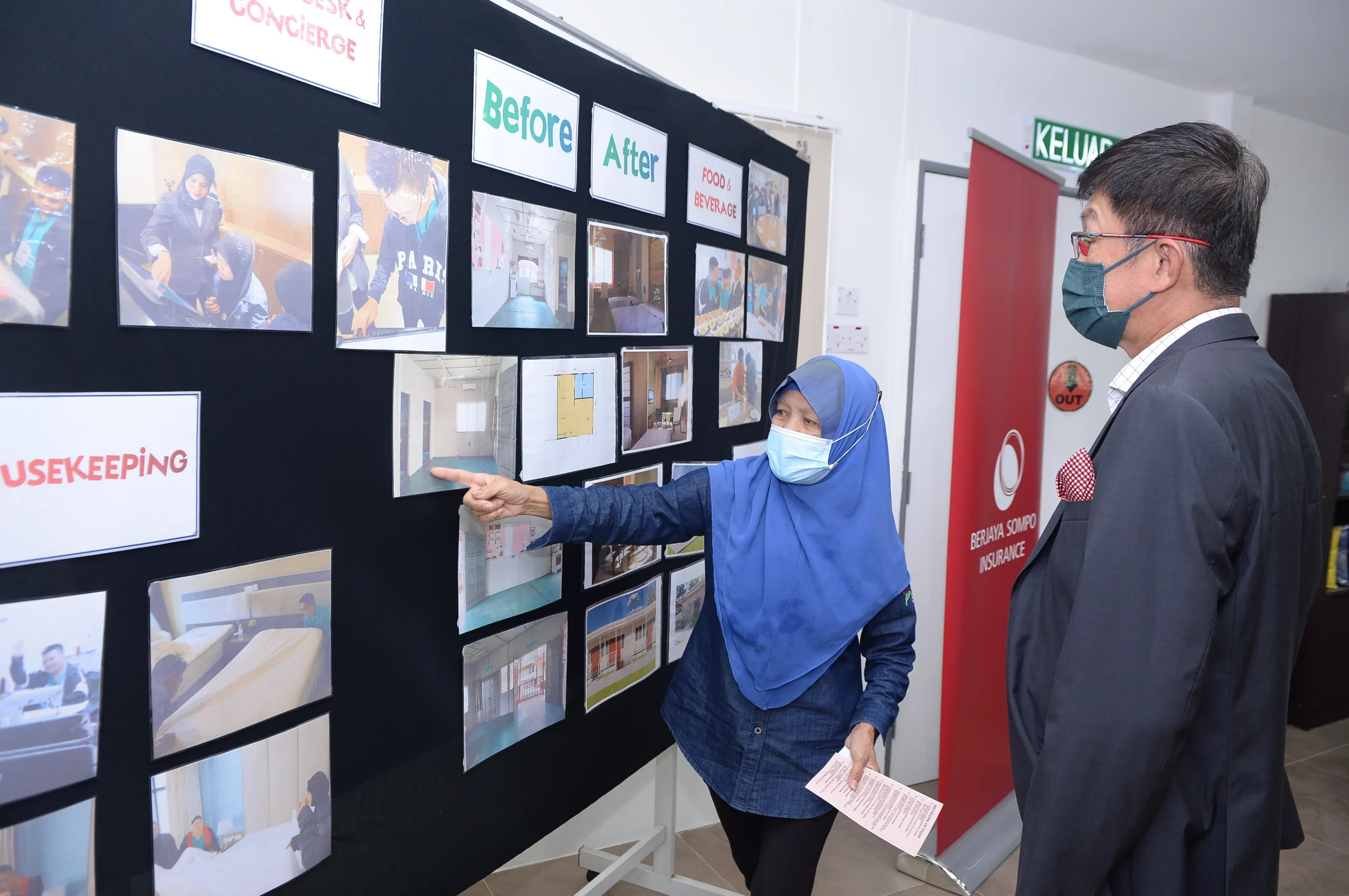
Berjaya Sompo Insurance (“Berjaya Sompo”), the Malaysian operating entity and part of Sompo Holdings (Asia) Pte. Ltd, recommended Persatuan Sindrom Down Malaysia (PSDM) to be one of the grant recipients for their continuous effort towards programmes and activities that will improve the quality of life for Individuals with Down Syndrome (IDS) and their families. One of their up-and-coming projects is the Assisted Live-in Facility (ALIF) project which will be used for the Assisted Living Training Programme.
Mr. Tan Sek Kee, Chief Executive Officer, Berjaya Sompo, said “This is the ninth time where the Sompo Welfare Foundation has granted a portion of its international grant programme for Malaysia. We are honoured to support the ALIT initiative, with programmes that aim to provide formal training to individuals with Down Syndrome to live and function independently as they progress to join the workforce in the future.
We are proud to be part of PSDM’s initiative to improve the lives of individuals with Down Syndrome by providing the necessary facilities and programmes to help them practise and apply skills for everyday living so they may be more independent.”
Mr. Tan Sek Kee presented the RM32,500 mock cheque to Puan Norhana binti A. Bakar, the president of Persatuan Sindrom Down Malaysia. In her acceptance speech, Puan Norhana said, “We are very grateful to be selected as a recipient of the Sompo Welfare Foundation Social Welfare Grant, which will support our ALIT programme.
With proper training, many, if not majority of individuals with Down Syndrome are able to manage themselves and their daily needs. However, they will also need assistance, whether more or or less, will depend on their level of functionality.
Majority are in the moderate category and will need less assistance than the low function but more than the high function. Therefore, training programmes that focus on independent living is essential to help special needs children learn how to manage their daily lives with minimal assistance.”