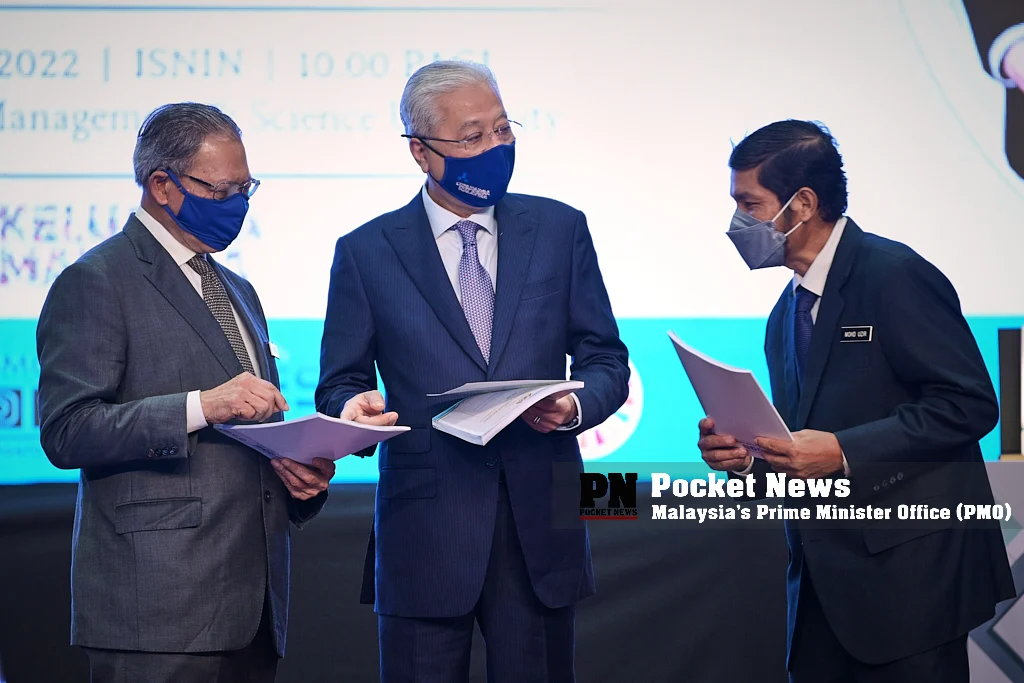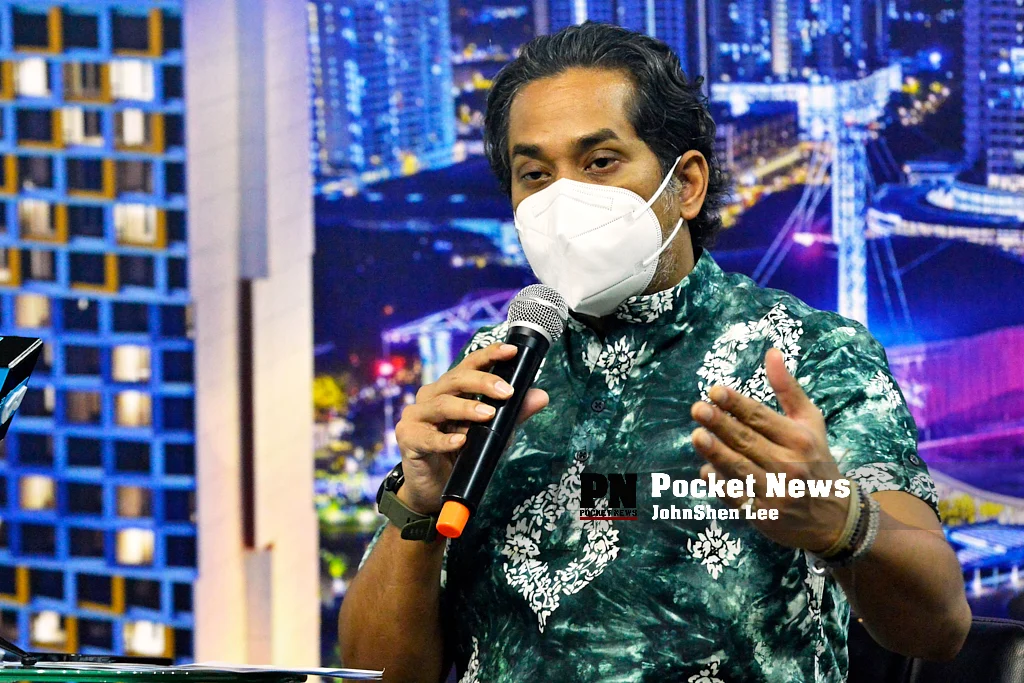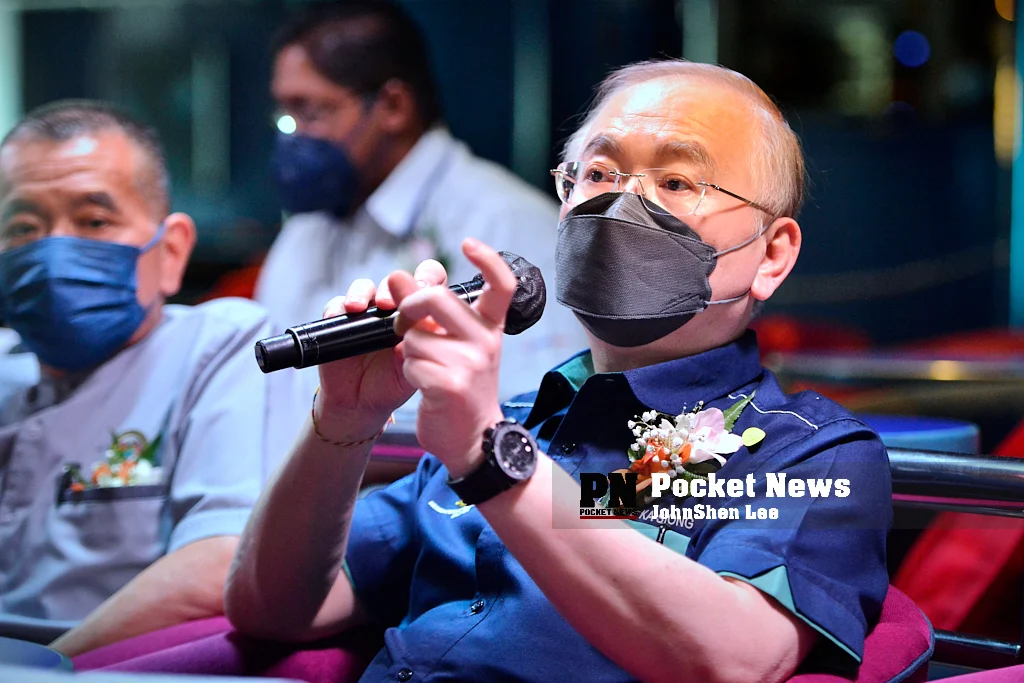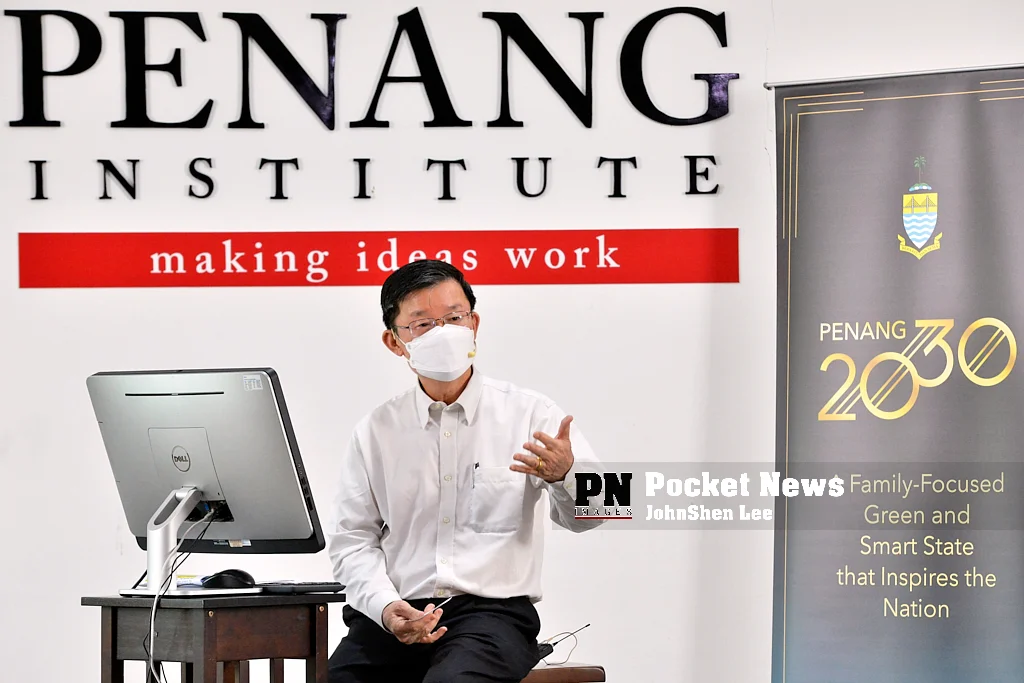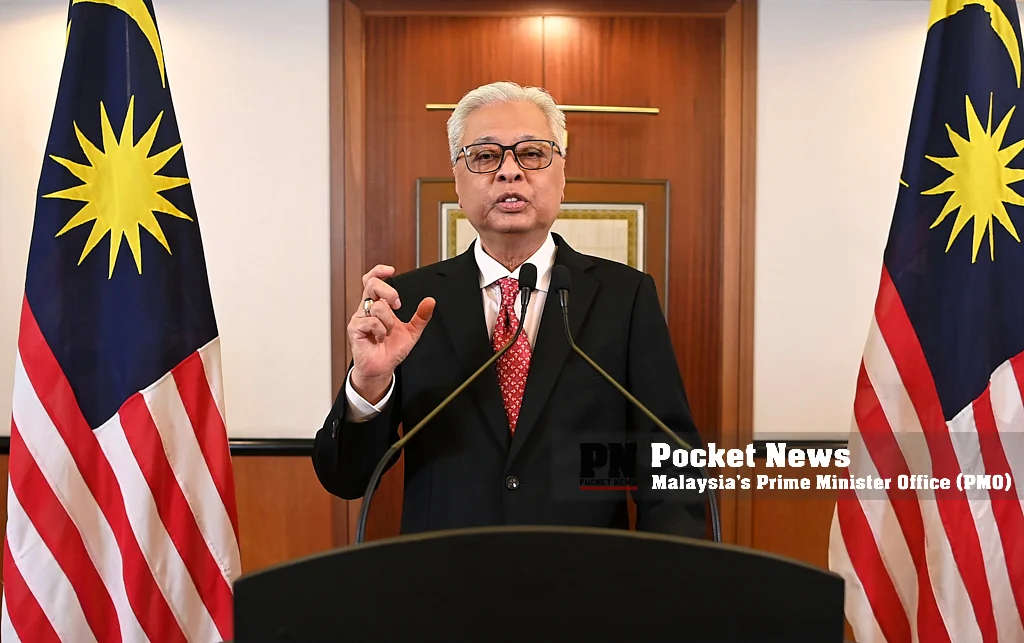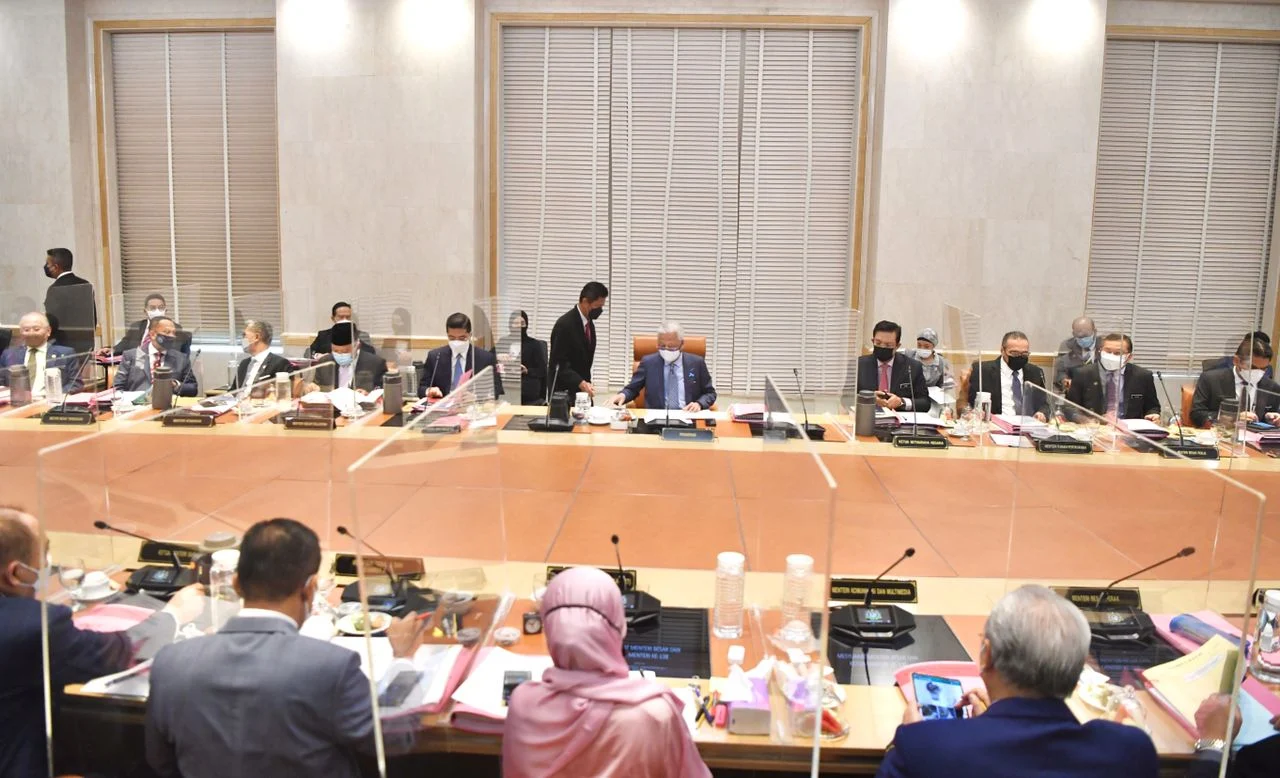



PUTRAJAYA, March 8 – Prime Minister YAB Ismail Sabri chaired the 138th Menteri Besar and Chief Minister’s Meeting (MBKM). The face-to-face meeting was attended by the Menteri Besar and Chief Minister as well as the relevant Cabinet Ministers.
A total of five papers were presented involving close cooperation between the Federal Government and the State Government to ensure that the Malaysian Family well -being agenda can be implemented.
Among the agenda of today’s discussion is the joint commitment of the Federal and State Governments on land acquisition for the implementation of public interest government development.
The Government is responsible for providing quality infrastructure facilities for Malaysian families to stimulate economic growth. The land issue caused delays and indirectly had financial implications for the Government.
In the 12th Malaysia Plan (12MP), the government focuses on high-impact infrastructure projects such as the East Coast Rail Link (ECRL) project, Gemas electric double track to Johor Bahru, Rapid Transit System (RTS) Project, West Coast Highway (WCE), Central Spine Road and Kota Bharu – Kuala Krai Highway. These projects will provide significant economic benefits to the states involved
Today’s meeting decided, the State Government needs to give priority and expedite the approval of land acquisition applications for Federal Government projects.
Project land involving alignments is approved on a reservation basis while the site of an operations center, office or station is approved on an ownership basis.
The State Government helps resolve the issue of barriers on State Government land involved with public interest government projects.
At the same time, further discussions will be held on the premium rate charged for land ownership and tax by the State Government in line with the resolution made by the National Land Council.
The meeting was also informed about the Malaysian Family Hardcore Poverty Eradication Program (BMTKM) which will be implemented in April 2022 involving 480 pilot localities throughout the country involving the involvement of all parties, especially the State Government. BMTKM will use the following approach:
i. Establish special Poverty Units at the Federal, State and District levels.
ii. Creating an integrated and centralized database of poverty
iii. Enhancing the bottom-up approach program through a whole-of-nation approach
iv. Implement poverty solutions at the grassroots level.
The program, which aims to eradicate the hardcore poor by 2025, will begin with phase 1 involving 80 pilot localities across the country. Phase 2 and Phase 3 will begin in September and December 2022. Phase 4 to phase 6 will be implemented in 2023.
BMTKM is in line with the new policies and strategies to eradicate hardcore poverty of the 12MP.The meeting was also briefed on disaster management strategies due to unpredictable weather conditions as a result of global warming involving 11 short -term solutions and 9 long -term solutions.
Short-Term solutions include:
i. Ensure the readiness of flood mitigation infrastructure (pumps, sluices and generator sets) at the optimum level in collaboration with the state government
ii. Maintain, deepen and clean drainage systems and flood reservoirs.
iii. Upgraded 516 siren stations and 155 existing webcam stations and developed 361 new webcam stations.
iv. Upgrade 100 weather observation stations using high -tech equipment that can issue real -time and reliable weather forecasts and warnings.
v. Enhance the ability of the myCuaca application for the efficient and effective delivery of critical information to Malaysian Families.
Among the long -term solution measures are:
i. Development of the Water Sector Adaptation Act to strengthen the governance of climate change adaptation of the water sector.
ii. Nature-based solution approach such as the construction of river trails as a platform for community involvement.
iii. Increase the capacity of flood water reservoirs.
iv. Strengthen the implementation of the Integrated River Basin Management approach.
The meeting also agreed for more engagement sessions between the Federal Government and the State Government, especially involving development projects in the states.