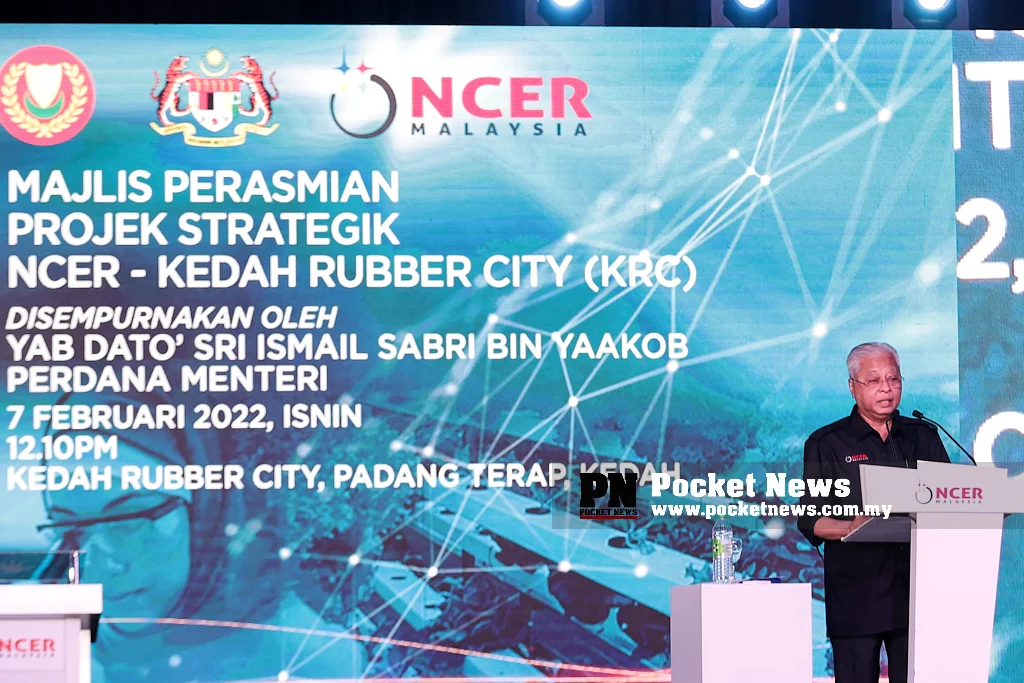



ALOR SETAR, February 7 – NCER is currently facing a bright growth outlook, which it is projected to record a Regional Gross Domestic Product (GDP) growth of 6.5% -6.9% in the Recovery Period 2021-2022.
Investor sentiment is also very positive at the moment and the prioritization of catalyst projects and programs as well as incentives by the Federal Government through the Northern Corridor Implementation Authority (NCIA) will continue to stimulate economic growth and recovery in the region. In fact, NCER has accounted for the majority of approved manufacturing sector investments in Malaysia until the Third Quarter of 2021, which is 61.4% of total investments in Malaysia.
The influx of private investment in NCER is closely linked to the implementation of Malaysian Family-based Human Capital programs by NCIA, which have benefited 67,935 people from 30 districts in NCER from 2019 to 2021. These programs are also in line with the targets of the Malaysia Plan. – 12 (RMK-12) towards eradicating hardcore poverty by 2025. It is also through the injection of livelihood assistance that is integrated with education, skills training for local people, as well as the provision of employment opportunities for the target group.
Based on these positive developments, it is important for the state of Kedah in particular, and NCER in general, to continue to increase competitiveness in the post-COVID-19 era in order to attract more domestic and international investment. This move is important to maintain the momentum of economic growth and generate new employment and entrepreneurship opportunities for Malaysian Families.
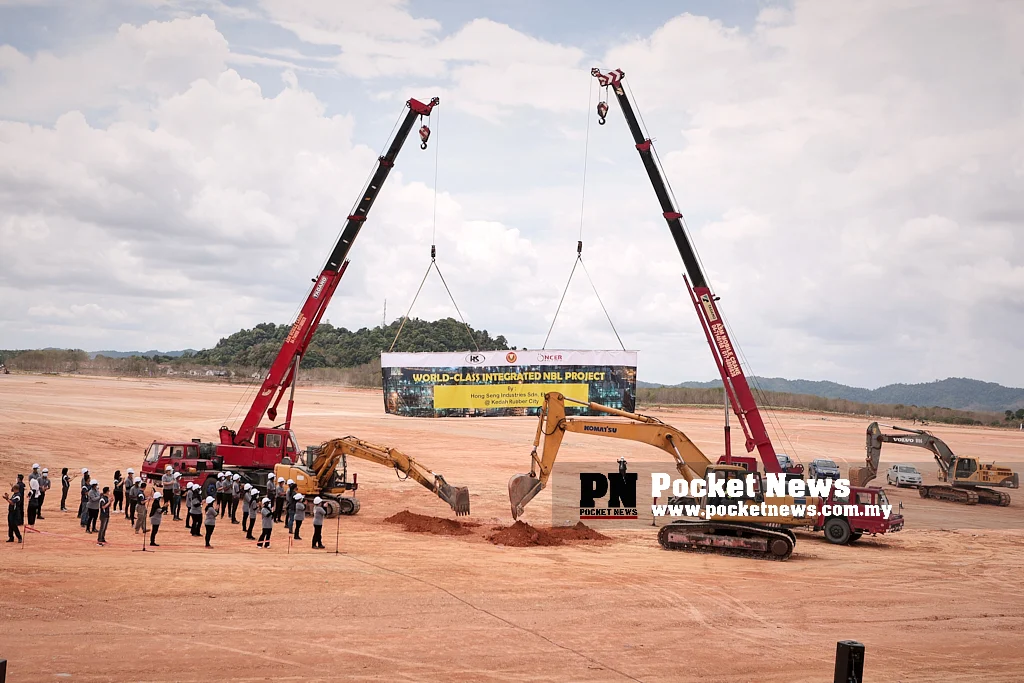
Under the 12MP, Kedah has been identified as one of the six states that will be given priority in national development planning. Thus, KRC is one of the various “game changer” projects implemented by NCIA in collaboration with the State Government to transform Kedah into a developed state, thus bridging the development gap between regions.
KRC was developed with the aim of making it a leader in the development of the country’s rubber industry as well as a hub for the high value rubber industry globally. Its existence reflects the growth momentum and economic progress of Kedah, which will be driven by a modern and smart agricultural sector as well as high value manufacturing.
If before, large -scale development was mostly only concentrated in urban areas. Today, Malaysian families in rural areas, including in Padang Terap, are also able to enjoy the abundance of prosperity created as a result of national strategic projects such as the KRC.
Based on its strategic location in the “Rubber Belt” area of the Malaysia-Thailand border, KRC will also foster closer regional cooperation and integration between the two countries, and is expected to be a driving force in connecting major rubber producers in the region under the Indonesian platform. -Malaysia- Thailand Growth Triangle (IMT-GT). KRC will also be a rubber product innovation center that can assist downstream and upstream activities for the sector.
In line with its vision to be a world -class eco -friendly industrial park, KRC offers good infrastructure and connectivity networks, as well as an investor -friendly talent pool and ecosystem.
KRC will attract potential investments worth RM10 billion and create 15,000 jobs by 2025. This project will provide various benefits to the local community. Although only recently launched, KRC has so far managed to attract a committed investment of RM4 billion which will generate almost 7,000 job opportunities for Malaysian families.
For example, the strategic collaboration between Mitsui & Co (Malaysia) Sdn Bhd and Hong Seng Consolidated Berhad (Hong Seng) involves an investment of approximately RM3 billion for KRC.
The collaboration will also strengthen the raw material supply chain in NBL polymer manufacturing with Mitsui’s expertise in the industry. This investment will not only create 1,600 new jobs but also reduce dependence on NBL polymer imports as Hong Seng will transfer the new advanced technology acquired to the country.
In addition to this strategic collaboration, we will see nine exchanges of agreement documents, letters of intent and memoranda of understanding (MoU) between investors and NCIA and other Government agencies. I warmly welcome and thank the investors who have given their support to make this national project a success.
The total KRC development covers an area of 1,244 acres, comprising 496 acres for Phase 1 and 748 acres for Phase 2. The physical work of the KRC project development by the NCIA is progressing as scheduled, of which Phase 1 of the project has been completed and ready for accepting investor input.
In this regard, I hope that investors from within and outside the country will seize this opportunity to locate their operations in KRC. The Federal Government with the support of the Economic Planning Unit (EPU) and the Prime Minister’s Department has approved an allocation of RM417.5 million for Phase 1 of the KRC project.
Based on the encouraging progress under Phase 1, Phase 2 of the KRC project will be implemented in 2023. As a child of a rubber tapper, I am very proud that this KRC project will benefit rubber smallholders in the state.
Although Kedah is one of the important rubber cultivation areas in the country, but the rubber industry in the state is mostly still focused on low value activities with limited marketing channels. As a result, many smallholders are still plagued by low incomes and poverty.
Thus, the KRC Project will help increase the income of smallholders by ensuring continued demand for their natural rubber supply, while stabilizing rubber prices through the optimal use of natural rubber with the production of value-added downstream products.
In addition, the KRC project will create new job opportunities for the locals. In this regard, the NCIA will work with RISDA for to develop and develop the local rubber smallholder community, which has the potential to benefit 73,642 smallholders in Kedah, including 11,190 smallholders from Padang Terap district.
This cooperation is very welcome so that NCER’s strategic agenda can be achieved for the prosperity of the people at various levels. Locals will also have the opportunity to participate through Malaysian Family-based human capital programs to address poverty such as skills upgrading and entrepreneurship programs provided by NCIA such as empowerNCER and entrepreneurNCER.
They can now participate in the supply chain activities of industry players who will operate in KRC in particular, and in the state of Kedah, in general. All this is in line with the target of zero hardcore poor by 2025 as outlined in the 12MP document. It is also in line with the aspirations of the Malaysian Family to ensure a fair, equitable and inclusive economic distribution for all citizens.
The Government is also aware of the importance of the role of financial institutions in providing financing facilities in particular to micro, small and medium enterprises (SMEs) in this post -pandemic recovery phase. I am pleased to be informed that Maybank and Agrobank have collectively provided financing of RM223.8 million for 16,600 PMKS since 2019.
Two banks, CIMB and AFFIN Bank, will also work with NCIA for the same program. With the involvement of the four banks, more than 22,500 PMKS are targeted to benefit from this program during the 12MP period.
I would like to take this opportunity to express my deepest appreciation to the state government under the leadership of YAB Dato ‘Seri Haji Muhammad Sanusi for the efforts and commitment given in developing the state of Kedah.
Well done and congratulations are also extended to the NCIA for the role it has played in the success of high-impact national strategic projects in NCER, including in the state of Kedah.
Dear investors, KRC is now ready to receive and welcome you. The Federal Government through NCIA in collaboration with the State Government will help facilitate investment in KRC in particular, and NCER in general.
The Ministry of Finance is also offering a Special Incentive Package for the KRC project in an effort to attract more investors to this industrial park. The close cooperation already established between the Federal and State Governments in the success of high-impact projects such as KRC will certainly be able to continue the momentum of recovery and economic growth of Kedah in particular, and NCER in general, in line with the goal of “Malaysian Family Prosperous, Inclusive, Sustainable” .